


10 Stylish Kitchen Islands With Seating Trends
- Feb 4
- 7 min read
Explore 10 stylish kitchen island trends that enhance social flow and everyday usability. You’ll see Scandinavian-inspired islands with open-plan layouts, multi-level heights for inclusive dining, and banquette corners for cozy social nooks. Integrated seating on adjacent sides encourages conversation, while hidden drawer storage keeps ranges sleek. Closed-storage islands with furniture-style legs offer a grounded look, and extendable surfaces help in compact spaces. Universal design guarantees accessible heights, and three-sided communal seating suits large kitchens. Discover more as you continue.
Scandinavian-Inspired Island Seating With Open-Plan Flow
A Scandinavian-inspired island seating plan emphasizes a calm, social hub that keeps the main work path clear. You’ll notice seating on the social side, avoiding the primary lane between fridge, sink, and cooktop, which promotes unobstructed flow.
The stool zone prevents overlap with movement routes, while curved edges prompt adjusted drawer planning to maintain internal volume. Leg placement guarantees comfortable clearance without sideways maneuvering around corners, and the overhang accommodates bar stools for socializing during cooking.
The stool zone protects movement paths; curved edges refine drawers, ensuring fit and leg clearance for social bar seating.
This approach reflects Scandinavian aesthetics through simple forms and honest materials, with open storage that keeps dinnerware and cutting boards accessible yet orderly.
Lower fixed shelves and floating oak displays balance practicality with a tidy, calm visual, supporting light, open storage within a cohesive open-plan layout.

Multi-Level Counter Heights for Inclusive Dining
Multi-level counter heights can make a kitchen more inclusive by accommodating different tasks and users without sacrificing style.
You can combine a 36-inch prep surface with a 42-inch bar for dual functions, while adding a 30-inch lower level for baking or accessibility.
Split-level islands provide standard heights plus a raised tier, supporting both standing and seated activities.
In practical terms, modern kitchens use varied heights—36-inch, 42-inch, and 30-inch—so everyone finds a comfortable spot.
Taller users benefit from 37–39 inches, while shorter users prefer 34–35 inches; ADA needs remain at or below 34 inches for wheelchairs.
These inclusive designs rely on adjustable heights and thoughtful seating compatibility, ensuring knee clearance and versatile use across tasks.
Incorporating sustainable materials like responsibly sourced wood not only enhances the aesthetic appeal of kitchen islands but also promotes environmental responsibility.
Banquette Corners: Cozy Social Nooks for European Tables
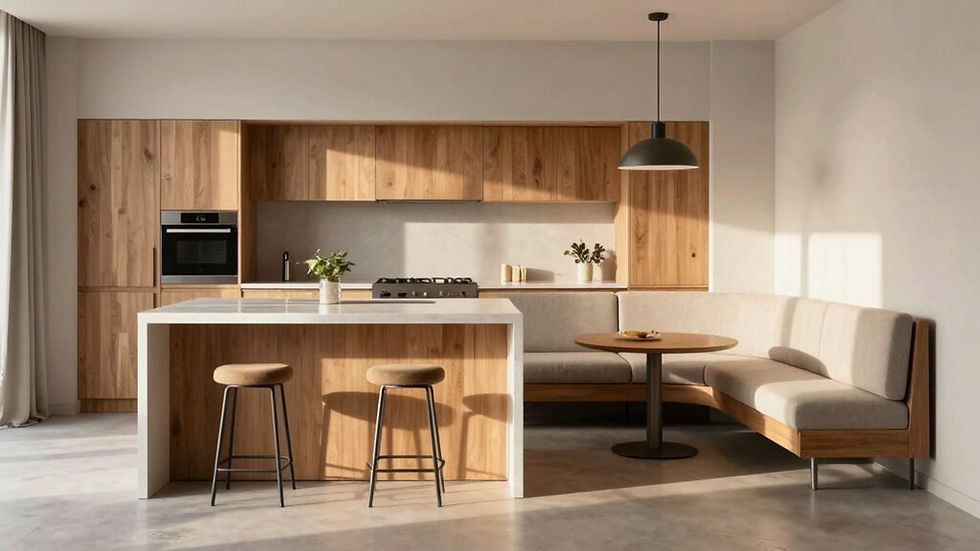
Banquette corners transform European-style tables into cozy social nooks that save space while inviting conversation.
You’ll appreciate how space efficiency comes from a compact footprint that pushes the bench against the wall, freeing floor area. L-shaped or U-shaped configurations wrap corners effectively, making the most of tight kitchens. A rounded banquette pairs well with round tables, enhancing maneuverability for everyday meals.
Choose wood benches to blend with cabinets, or opt for custom modular builds to tailor size and layout. Upholstery adds a restaurant-booth feel, while seat heights of 17–19 inches balance comfort with practicality.
Storage options under seats or in kick pleats boost multi-use functionality, and bold colors or patterns emphasize cozy corners in your European-inspired setup.
banquette design, cozy corners.
Integrated Seating on Adjacent Sides for Conversation
Integrated seating on adjacent sides for conversation brings people together where the kitchen truly happens.
When you place bench-style seating on two longest island sides, you foster natural interaction and a warm, communal atmosphere ideal for family gatherings. This arrangement enhances conversation dynamics by having participants face each other across the island, supporting easy eye contact and responsive dialogue.
Plan for 24 inches per seat and 36–48 inches around the island to keep movement smooth, and stagger seats to prevent bumps. Adjustable-height options and upholstered benches add comfort for extended chats.
The result is a versatile seating arrangement that transforms the island into a hospitality hub, blending with open-plan layouts while maintaining clean lines and coordinated aesthetics.

Hidden Storage and In-Drawer Appliances for Sleek Ranges
Hidden storage and in-drawer appliances are key to keeping ranges elegant and uncluttered, because clever concealment lets you hide bulky tools until you need them. You’ll find hidden compartments integrated into every side of kitchen islands, so pitchers, platters, and plates stay accessible without crowding counters. Appliance garages store coffeemakers and toasters out of sight, reducing clutter while preserving a sleek silhouette. In-drawer integration keeps kettles and utensils neatly organized, with vertical slots for quick access. Pull-out drawers further enhance usability, letting you reach pots, pans, and spices without digging. Glass-front cabinetry adds openness and a modern touch while maintaining elegance. Hidden compartments on island surfaces for streamlined design. Pull-out drawers and spice racks to maximize space. In-drawer appliances for a seamless, professional look.

Waterfall Edges and Fluted Details in European Kitchens
Waterfall edges bring a seamless, high-end look to European kitchens, where the countertop flows uninterrupted down the cabinet sides for a cohesive visual. You’ll notice how fluted details add refined texture that complements sleek line work, creating a balanced contrast with flat panels. This combination highlights craftsmanship and elevates both island presence and seating areas without overwhelming the space. Frameless designs, such as those found in thermofused melamine cabinets, maximize storage space and accessibility, further enhancing the modern aesthetic of European kitchens.
Waterfall Edge Elegance
Waterfall edges bring a seamless, sculptural feel to European kitchens, where vertical slabs flow from the countertop down to the cabinet base for a clean, uninterrupted look.
You’ll see how the waterfall design integrates with peninsula walls, benches, and open-plan layouts, creating cohesive room flow. With careful edge materials choices, these installations balance durability and beauty while highlighting bold veining and smooth shifts.
Emphasize symmetry with double-sided drops for grand, coordinated seating.
Select edge materials that pair with full-height backsplashes for uninterrupted planes.
Use curved waterfalls to achieve a soft, organic balance with curved cabinetry layouts.
This approach modernizes spaces, protects cabinet sides, and elevates value through precise, integrated details. Additionally, integrating minimalist aesthetics and timeless elegance can create a serene atmosphere while optimizing space in the kitchen.
Fluted Detail Delights
Fluted detail introduces a refined texture to European kitchens by pairing vertical grooves with the clean lines of waterfall edges.
You’ll notice how vertical grooves add depth to island fronts and cabinets, creating a subtle, artful rhythm that shifts with light. This texture contrast highlights architectural structure while preserving minimal, modern silhouettes.
The fluted panels mimic handcrafted furniture, infusing warmth without clutter, and they also help disguise fingerprints in busy homes.
In practice, these elements offer fluted elegance, blending traditional influence with contemporary taste. You’ll enjoy the tactile quality as you touch cabinet fronts and splashbacks, enjoying a responsive surface that remains easy to clean.
This approach elevates small spaces by providing height and sophistication within a cohesive, neutral palette.
Modern European kitchen cabinets often utilize hidden hinges to maintain a streamlined appearance, enhancing the sleek aesthetic of kitchen designs.
Closed Storage Dominant Islands With Furniture-Style Legs
Closed-storage islands with furniture-style legs merge practicality and style by anchoring closed cabinetry to solid, leg-supported bases.
You’ll notice how the shorter legs keep the look grounded while maximizing storage, with a clean separation between base and cabinet.
Custom leg designs let you tailor the height and silhouette to your space, enhancing furniture style aesthetics without sacrificing function.
The result is a cohesive, refined island that reads as furniture, not merely utilitarian worktop.
Choose custom leg designs that complement your cabinetry and countertop materials.
Favor furniture style aesthetics with tapered or turned profiles for balanced proportions.
Integrate solid wood legs with discreet notching for receptacles or shelves.
This approach keeps the island sturdy, visually pleasing, and highly adaptable to daily kitchen needs.
For a timeless aesthetic, consider using Solid Wood Cabinets crafted with 100% natural maple wood, which adds durability and elegance to your kitchen island design.
Extendable Counter Surfaces for Compact Spaces
Extendable counter surfaces are tailor-made for small kitchens, letting you gain extra workroom when you need it and tuck it away when you don’t. In compact layouts, pullout mechanisms extend surface in one direction, while tuck-away designs near the stove create prep space without crowding traffic. A pullout butcher block near the window offers temporary work areas, and a beneath-drawer compost bin keeps waste neatly managed. Lift-up options align with the main counter for added area without bulk. These features embody space saving designs and multifunctional surfaces. They also support dining or prep roles, with slide-out extensions and integrated sink covers expanding usability. Choose slim profiles and durable materials to maintain openness while boosting functionality in tight kitchens. Consider integrating wall-mounted cabinets to maximize vertical space and keep the floor clear, enhancing both functionality and aesthetics in compact environments.
Universal Design: Accessible Heights and Flexible Layouts
Universal design in the kitchen means both accessible heights and flexible layouts that work for everyone, no matter their size or mobility.
You’ll find adjustable countertops and cabinets that suit varied abilities, plus open concepts that improve access, lighting, and maneuverability.
Extensible tables attach to counters and adjust to wheelchair height, while multiple counter heights create workspaces for standing and seated users.
ADA-compliant knee and toe clearance guarantee smooth moves under sinks and cooktops, supporting inclusive use.
Clearances around islands and pathways keep traffic flowing, and adaptable storage helps reach from a seated position.
In practice, accessible designs prioritize comfort without sacrificing style, delivering kitchens that welcome all.
Adjustable heights and open layouts
Clear circulation and knee/toe clearance
Versatile storage for seated reach

Communal Seating on Three Sides for Large-Scale Kitchens
Communal seating on three sides maximizes capacity and fosters conversation in large-scale kitchens. You’ll find bench-style seating on three sides, which accommodates family meals and gatherings, boosting sociability during meals and prep.
Large islands, including twelve-foot versions, support seating for entire families, making space feel welcoming for communal dining. Overhangs designed for barstools or banquettes on three sides expand seating without crowding aisles.
Large islands, including twelve-foot versions, welcome entire families for communal dining.
Double-sided access enhances usability in open-plan layouts, allowing people to mingle from any direction. The arrangement promotes spacious gatherings by inviting direct eye contact across the island, supporting interaction while you cook.
However, it requires a larger footprint and side clearance for chairs to maintain smooth traffic flow. Overall, this setup suits open-plan homes seeking inclusive, functional entertaining spaces.
Wrapping It Up
You’ve explored 10 stylish kitchen islands that balance form and function. From Scandinavian-inspired layouts to universal design and multi-height solutions, you’ve seen how seating can shape flow, social interaction, and storage. Consider your space, traffic patterns, and accessibility as you plan. Integrate hidden drawers, extendable surfaces, or three-sided communal seating to fit your needs. With thoughtful choices, your kitchen island becomes a versatile hub that supports daily tasks, gatherings, and lasting comfort.


Comments